Our History of Formation
The text that is clearly readable from the two pages is:
History on the Formation of
ASIAN MARINE CONSERVATION ASSOCIATION (AMCA)
DR. AJIT KUMAR DOLUI, Ph.D., D.I.I.T.,
Reader in Soil Science, Calcutta University,
EXECUTIVE MEMBER & Treasurer, AMCA
Professionally a lawyer, besides his educational degrees in Biological and Agricultural Sciences, and subsequently educated and trained in the field of Marine Science and Management at Bermuda Island (when he was in academic courses and training under Prof. James Newton Butler, G. M. Professor of Applied Chemistry, Harvard University, MA, USA), Anupam Ghosh had realized that Sea's living resources are not inexhaustible and oceans can no longer be treated as bottomless sink for pollutants. Prior to 1982, being less acquainted with the activities already adopted by the world's authentic organizations, Mr. Ghosh started to communicate and to visit to many potential people/scientists working in the marine and coastal fields in Europe and United States, to become more experienced on the situation then were prevailing in the oceanic environment.
Being high encouraged by many scientists, he became strongly interested in looking for the sources of sea's problem(s) exactly. He realized that most of the sea's problems begin on land, proceeds to the sea through coasts and finally come back to the land to haunt the people in many ways of ecological disturbance which eventually lead to the disruption of socio-economic systems – locally, nationally and internationally.
To evaluate, assess and think over the problem critically and for its solution internationally (he uses the quotation, "Marine Environment does not have any boundary, -- the boundary we imagine is political and therefore, human-made !"), he thought that simultaneous drive for both education and mass awareness programmes in the marine and coastal discipline, those have not yet been carried out in action here, could motivate Scientists, Social-Scientists, Technicians and Decision-makers to a good extent of interest in the solution regionally and thereby internationally.
He himself, considers and has been trying to convince others that the coastal problems are less often the dangerous concern of just one country, rather, there lies every possibility of the neighbouring countries to be victimised in the forms particularly of the declined fish harvest, degradation of coastal and/or deep water marine ecosystems caused by unwise disposal of urban and town wastes up the coasts and oil spill (always accidental ?) those smear the tourist beaches and degrade the overall marine ecosystems.
Perhaps at this moment of his thought, Mr. Ghosh was mentally prepared and very much wanted to start the organization – what now is known as Asian Marine Conservation Association (AMCA).
In the year 1987, he requested Mr. B. K. Ganguly of a consultancy firm, to help him by providing a space to teach students exclusively in the marine and coastal resources management. At that time, I also admired and actively supported (and still support) his concept that ‘mere being taught in general marine science with individual specialization, people can not be able to cope with the problems in marine and coastal areas.’
Anyway, after consultation with Mr. Ganguly, Mr. Ghosh approached to another businessman Mr. R. Chatterjee for providing a space for the purpose of educating the people in the discipline of coastal resource Management where ‘conservation of resources’ and ‘defending the marine pollution’ should specially be envisaged. When provided with a space through a private institute owned by Mr. Chatterjee, Anupam Ghosh – as the Hony.
Coastal Resource Management Course
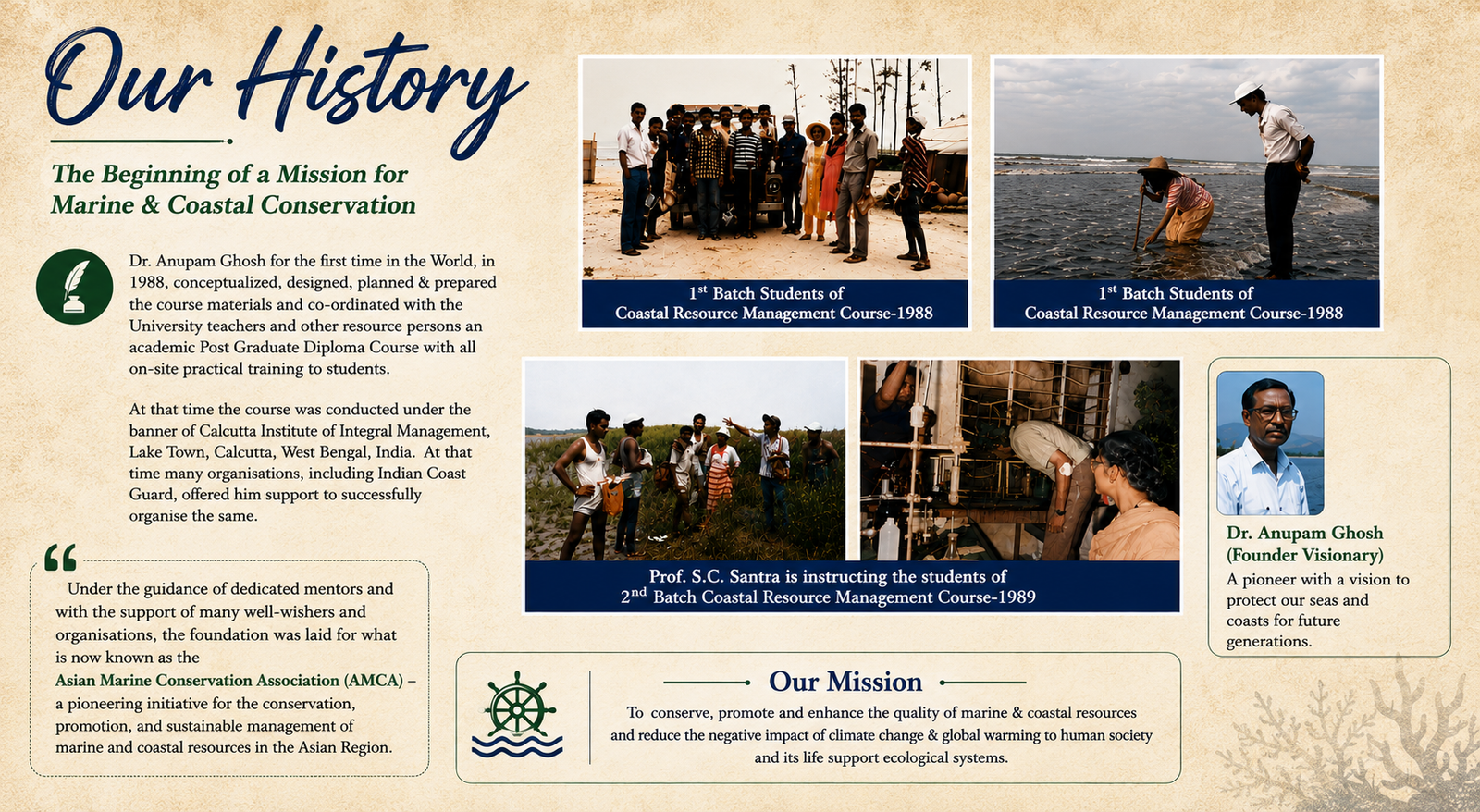
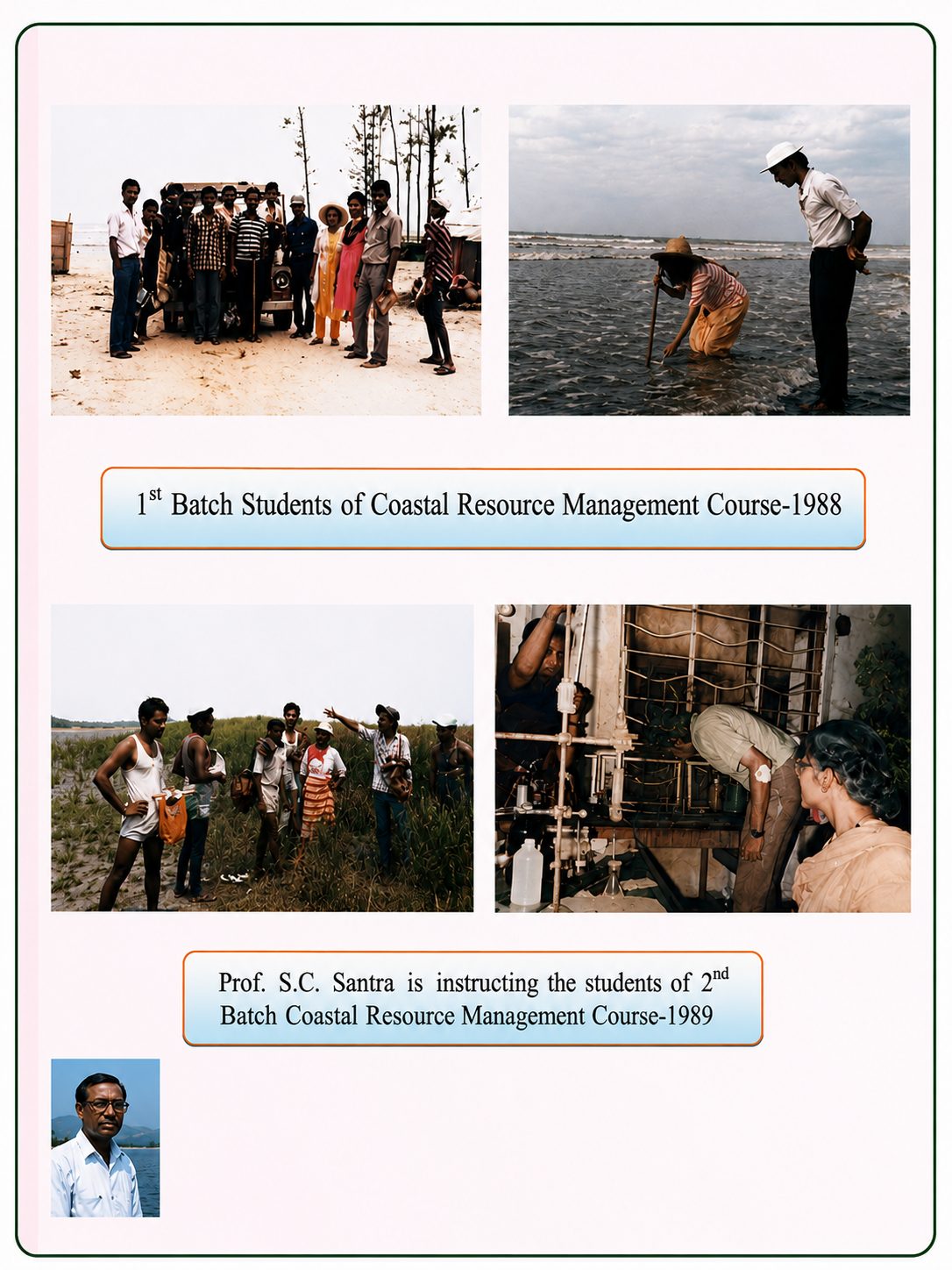
Dr. Anupam Ghosh for the first time in the World, in 1988, conceptualized, designed, planned & prepared the course materials and co-ordinated with the University teachers and other resource persons an academic Post Graduate Diploma Course with all on-site practical training to students. At that time the course was conducted under the banner of Calcutta Institute of Integral Management, Lake Town, Calcutta, West Bengal, India. At that time many organisations, including Indian Coast Guard, offered him support to successfully organise the same.
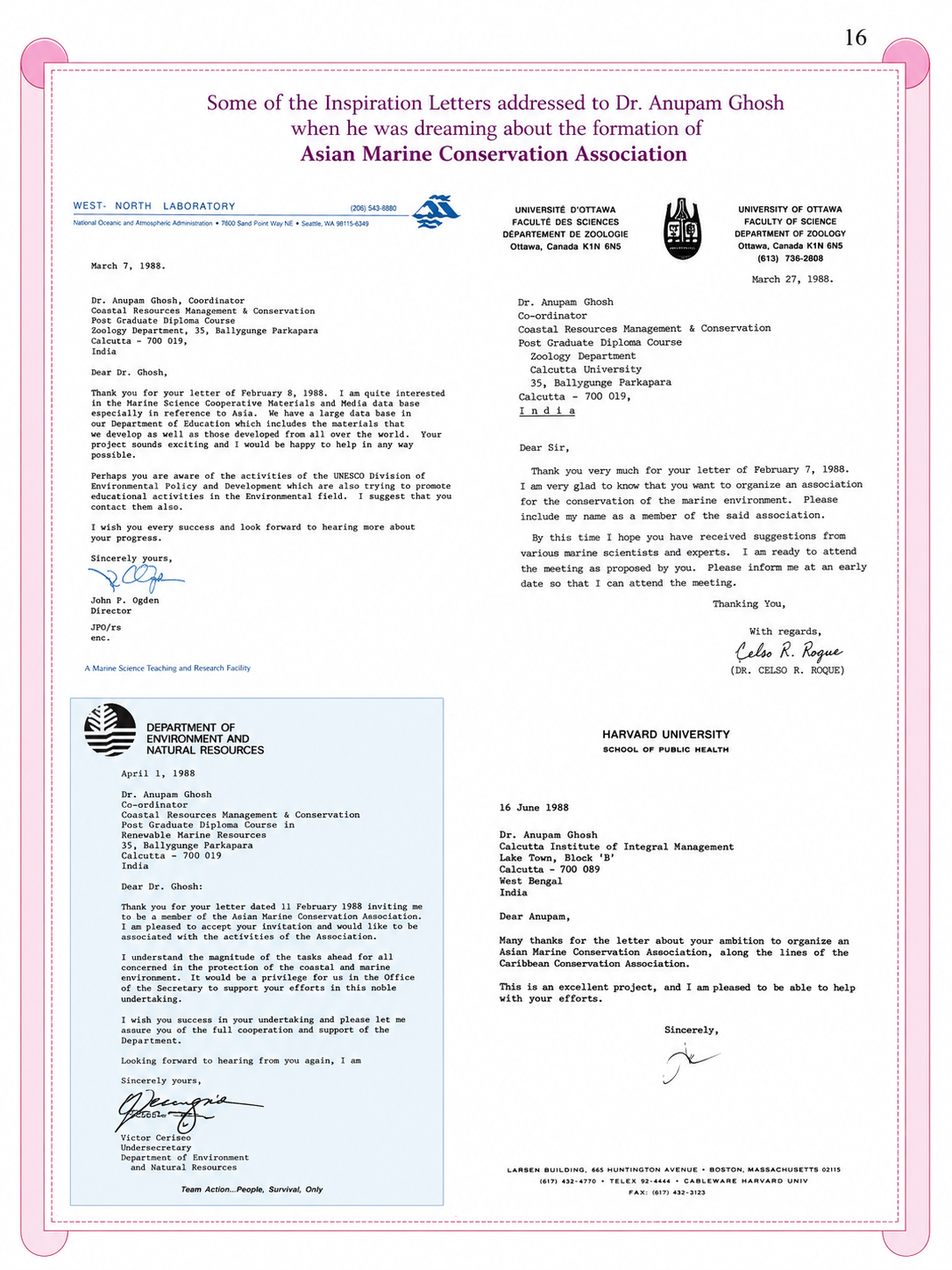
Reprinted from the Souvenir of the 1st International Seminar on 'Coastal Environment in Asian Region – Potentialities & Problems' December 8, 1989, at Calcutta, India.
Co-ordinator was able to start the Post-Graduate Diploma Course, “Coastal Resources Management & Conservation of Renewable Marine Resources” with exclusive and cordial assistance by Prof. N. C. Datta, Department of Zoology, Calcutta University, Dr. G. K. Das, Ottawa University, Canada, Mr. B. K. Ghosh (Information Scientist), Dr. S. C. Santra, Head, Department of Ecology, Kalyani University, West Bengal, as well as by me. For this course, Prof. N. C. Datta was acting as the Hony. Course Director, and the rest of us were faculty members having independent area of specializations. To proceed with his noble and devoted venture, Mr. Ghosh in the meanwhile, had performed several communications for many potential people, scientists, and decision-making organizations and received bulk of materials in exclusively cooperated manner from many potential sources of world corners and specially from: Ms. Meera Pathmaraja, The International Register of Potentially Toxic Chemicals, UNEP; Mr. M. R. Amini; Ms. Annettee Forster, OCA/PAC, UNEP, Nairobi, Kenya; Dr. David A. Ross; Dr. T. A. Landry, International Marine Science Co-operation Programme, MA, USA. Going through enormous and authentic documents, he then became confident that it should an urgent need to form Asian Marine Conservation Association (so far I recall my memory, Mr. Ghosh has coined this name of the association!) legally authenticated and should have been working restricted to the Asian Region, where the people are anyway handicapped to develop them in this particular area due to whatever reasons. By nature very faster in work and activities, Mr. Ghosh immediately took action by approaching to several potential scientists worldwide and requested them to help him in forming the ‘AMCA’. Except a few, almost everybody committed to him with their active co-operation in noble manner.